Key Factors to Improve Quality in the Manufacturing of Industrial Parts
Practical guide on how to optimize quality in industrial manufacturing through process control, precision, finishing, and continuous improvement.

Introduction
In an increasingly competitive industrial environment, quality in the manufacturing of industrial parts is not just a differentiator, but a fundamental requirement to ensure operational efficiency, regulatory compliance, and customer satisfaction. Organizations that successfully integrate quality control, process precision, and production consistency tend to reduce costs, minimize waste, and improve their position in the global market.
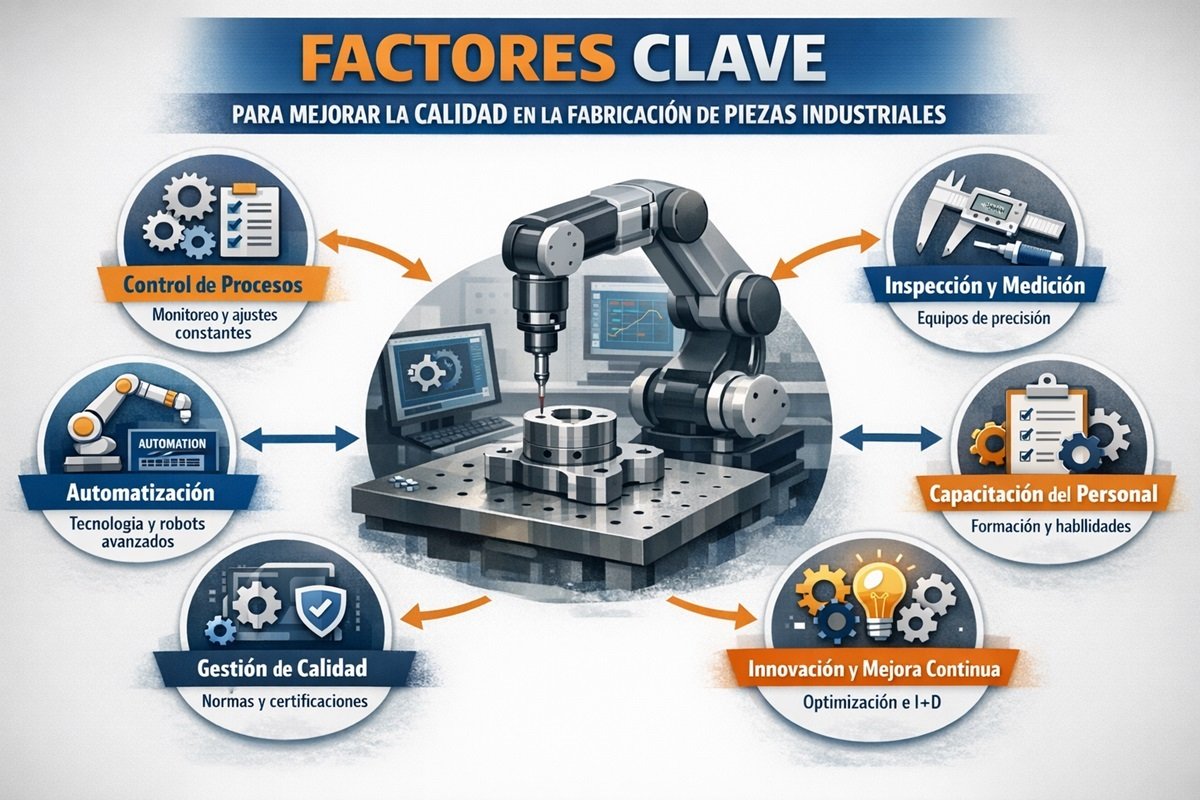
Quality does not depend on a single factor. It is the result of a strategic combination of well-defined processes, appropriate technologies, clear standards, and an organizational culture focused on continuous improvement. From the selection of raw materials to the final finishes, each stage of the process directly impacts the performance of the final product.
In this context, solutions such as die casting Mexico have become established as efficient alternatives for manufacturing metal parts with high precision and scalability, while specialized services like plating services Mexico add value in terms of durability, corrosion resistance, and surface quality.
Quality Control in Industrial Processes
Quality control is the central pillar of any industrial manufacturing strategy. Its objective is to ensure that each part meets defined technical specifications and international standards.
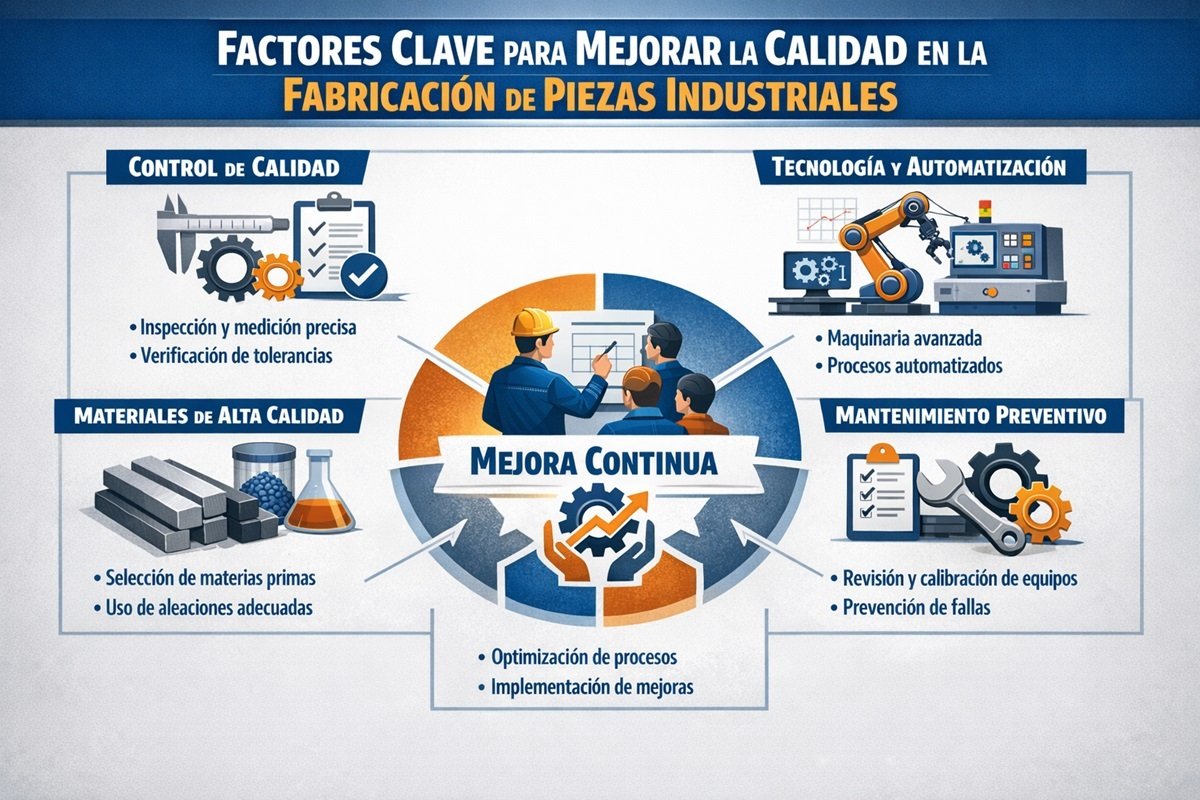
Key Elements of Quality Control:
- In-process inspection (IPQC): Enables real-time detection of deviations.
- Statistical process control (SPC): Analyzes variability and stability.
- Destructive and non-destructive testing (NDT): Evaluates structural integrity.
- Internal and external audits: Validate regulatory compliance.
Why is it critical?
- Reduces defects and rework
- Improves operational efficiency
- Ensures production consistency
- Strengthens customer trust
Leading companies integrate real-time digital monitoring systems, enabling data-driven decisions rather than assumptions.
Precision and Tolerances in Manufacturing
Precision in manufacturing is essential to ensure the proper assembly and functionality of industrial parts. Precision tolerances define the acceptable limits of dimensional variation.
Factors Influencing Precision:
- Quality of machinery and tools
- Thermal stability of the environment
- Equipment calibration
- Operator experience
Processes such as die casting Mexico allow the production of complex parts with tight tolerances and high repeatability, making them ideal for industries such as automotive, electronics, and aerospace.
Best Practices:
- Implement advanced metrology (CMM, 3D scanners)
- Establish clear tolerance standards
- Perform regular calibrations
- Continuously train technical staff
Importance of Surface Finishes
Surface finishing is not just an aesthetic aspect; it serves critical functions in product performance.
Benefits of Industrial Finishes:
- Improves corrosion resistance
- Increases component lifespan
- Reduces friction and wear
- Enhances electrical conductivity (in some cases)
Services such as plating services Mexico provide advanced coating solutions that optimize the physical and chemical properties of metal parts.
Common Types of Finishes:
- Galvanizing
- Anodizing
- Electroplated coatings
- Polishing and heat treatment
A poor finish can completely compromise the functionality of a part, even if its manufacturing was precise. That is why finishes must be considered from the design stage.
Consistency in Large-Scale Production
Consistency is one of the biggest challenges in industrial manufacturing. Maintaining the same quality across thousands or millions of parts requires standardized and controlled processes.
Key Factors to Achieve Consistency:
- Process documentation (SOPs)
- Automation of production lines
- Control of critical variables
- Full traceability
Effective Strategies:
- Implementation of MES (Manufacturing Execution Systems)
- Use of IoT sensors for continuous monitoring
- Integration of artificial intelligence for failure prediction
Consistency not only improves quality but also reduces operational costs and delivery times.
Defect Reduction and Continuous Improvement
Reducing defects is essential to increase profitability and competitiveness. This is where continuous improvement comes in.
Key Methodologies:
- Lean Manufacturing
- Six Sigma
- Kaizen
Tools Used:
- Root cause analysis (RCA)
- Ishikawa diagrams
- FMEA (Failure Mode and Effects Analysis)
Expected Results:
- Reduction of waste
- Improvement in cycle times
- Higher customer satisfaction
Quality Regulations and Standards
Compliance with regulations is essential to operate in global markets.
Most Relevant Standards:
- ISO 9001: Quality management
- ISO 14001: Environmental management
- IATF 16949: Automotive industry
Benefits of Compliance:
- Access to international markets
- Improved internal processes
- Reduction of legal risks
Recommendations:
- Conduct periodic audits
- Train staff on regulations
- Maintain updated documentation
Automation and Advanced Manufacturing Technologies
Digital transformation is redefining industrial manufacturing.
Key Technologies:
- Industrial robotics
- Artificial intelligence
- Additive manufacturing (3D printing)
- Machine learning
Impact on Quality:
- Reduction of human errors
- Greater precision and repeatability
- Real-time process optimization
The integration of automation in processes such as die casting allows control of critical variables like temperature, pressure, and cooling time, significantly improving final product quality.
Manufacturing Solutions Ecosystem
To achieve high levels of quality, it is essential to integrate different solutions within an efficient ecosystem.
Components of the Ecosystem:
- Raw material suppliers
- Manufacturing processes (such as die casting)
- Finishing services (such as plating)
- Quality control systems
- Logistics and distribution
The most successful companies do not rely on a single process but combine multiple technologies and services to optimize results.
Conclusion
Improving quality in the manufacturing of industrial parts requires a comprehensive approach that covers everything from design to final finishing. Quality control, precision in tolerances, industrial finishes, and production consistency are interdependent elements that determine the success of any manufacturing operation.
In addition, the adoption of advanced technologies and compliance with international standards allow companies to compete in global markets with confidence. Integrating solutions such as die casting for precise manufacturing and plating services for durable finishes not only improves product quality but also enhances its market value.
The key lies in continuous improvement, data-driven decision-making, and building a strong and efficient manufacturing ecosystem.
FAQ: Frequently Asked Questions
1. What improves quality in industrial manufacturing?
The combination of quality control, automation, precision in tolerances, and standardized processes significantly improves quality.
2. How can consistency in production be ensured?
Through automation, the use of real-time monitoring systems, and process standardization.
3. Why are industrial finishes important?
Because they directly influence durability, corrosion resistance, and functionality of parts.
4. What role do ISO standards play?
They ensure that processes meet international standards, improving reliability and access to global markets.
5. What technologies are transforming manufacturing?
Artificial intelligence, robotics, IoT, and additive manufacturing are revolutionizing the industry by improving precision, efficiency, and quality.
In an environment where quality defines competitiveness, having strategic partners makes the difference; on that path, CRECSO positions itself as a reliable partner to drive more precise, efficient, and results-oriented manufacturing processes.