How Much Do Bathroom Wall Panels Cost in the UK? Complete 2026 Price Guide
Discover how much Bathroom Wall Panels cost in the UK in 2026. Compare PVC, SPC and wet wall panel prices, installation costs, labour charges, and real renovation examples to help you budget your bathroom project with confidence.

Walk into any bathroom showroom in the UK right now and you’ll notice something that would have seemed odd ten years ago. The tile displays have shrunk, and half the floor space is given over to wall panels.
There’s a simple reason for this. Tiling labour has become one of the most expensive parts of a bathroom renovation. A decent tiler in most of England now charges £200 to £280 a day, and a full bathroom takes three to five days to tile properly. Wall panels cut that same job down to a single day. Sometimes less.
Panels are also completely waterproof, and there’s no grout to scrub, discolour or reseal. Put those two things together and it’s easy to see why they’ve moved from budget compromise to mainstream choice. Landlords adopted them first. Anyone who has regrouted a rental bathroom between tenancies understands the appeal. But panels are now common in family homes and increasingly turn up in higher-end renovations too.
Before we get into the detail, here’s a rough guide to what you’ll pay. Budget PVC bathroom wall panels cost £20 to £40 per panel. Mid-range options sit around £50 to £100 per panel. Premium laminate or composite panels run £100 to £300 per panel.
A typical small UK bathroom, with around 10 to 12m² of wall area, costs roughly £300 to £850 in materials and £150 to £450 to have professionally fitted. That’s often less than half the total cost of tiling the same room.
The rest of this guide breaks down where your money actually goes, what pushes prices up or down, and whether panels genuinely work out cheaper than tiles once you count the hidden extras.
What Are Bathroom Wall Panels?
Bathroom wall panels are large, rigid, waterproof boards that fix directly to your walls, usually with adhesive. The edges interlock with a tongue-and-groove joint to create a sealed, watertight surface. You’ll hear them called wall panels, shower panels, bathroom cladding or wet wall depending on where you are in the country. Wet wall is the standard term in Scotland. They all mean broadly the same thing, though the materials underneath vary quite a bit.
PVC panels
The entry point of the market. PVC panels are hollow-cored plastic boards, typically 5 to 10mm thick, sold in sizes around 2,400mm to 2,600mm tall and 250mm to 1,000mm wide. They’re light enough for one person to handle and cut with an ordinary hand saw. Because the material is waterproof all the way through, there’s no core to swell if water ever gets behind a joint. The trade-off is that thinner boards can flex slightly on uneven walls, and cheaper printed finishes don’t always convince up close.
Composite and laminate panels
These are the panels you’ll find from brands like Multipanel, Mermaid and Showerwall. A plywood or MDF core (or increasingly a fully waterproof solid core) is wrapped in a high-pressure laminate surface. They’re heavier, stiffer and noticeably more solid to the touch than PVC, with far more realistic stone, marble and wood finishes. Expect to pay three to five times more. This is what you’d choose if the bathroom needs to look genuinely high-end.
SPC panels
Stone plastic composite is the same material used in rigid luxury vinyl flooring, and in recent years it has moved onto walls. SPC panels are dense, fully waterproof and very stable. On price, they sit between PVC and laminate. A good middle option where you want more rigidity than hollow PVC without paying laminate money.
Wet wall panels
“Wet wall” usually refers to large-format panels, often 1,000mm or 1,200mm wide, designed to line a shower enclosure with as few joints as possible. Two or three panels can cover an entire shower area. Fewer seams means fewer places for water to find a way in. They come in PVC, acrylic and laminate versions.
Decorative panels
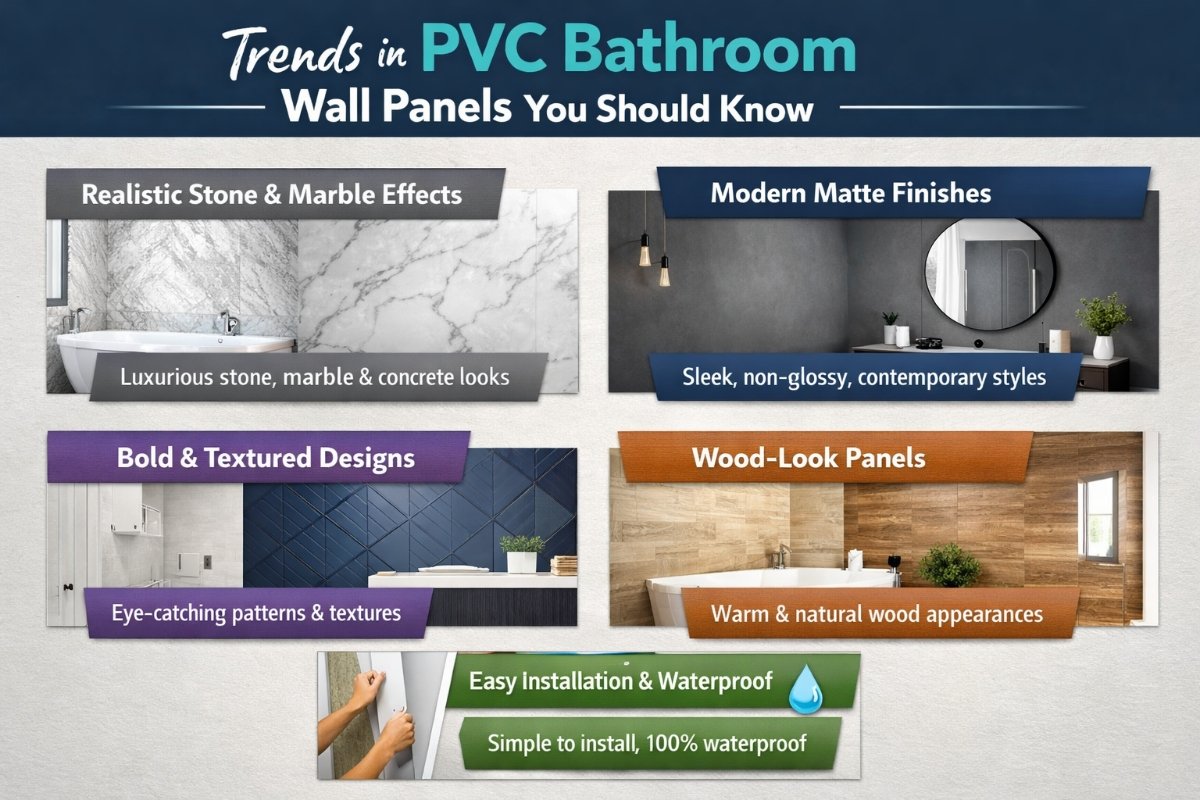
Marble effect, concrete effect, sparkle finishes, tile-effect boards with printed grout lines, wood grain. The finish sits on top of whichever core material you choose. Tile-effect PVC is particularly popular with landlords because it gives the look of a tiled bathroom for a fraction of the cost, with none of the grout maintenance.
In practice, UK homeowners use panels in three main ways. Lining a shower enclosure only, which is the most common job. Panelling the full bathroom from floor to ceiling. Or fitting splashback-height panels around a bath with painted walls above.
Average Cost of Bathroom Wall Panels in the UK
Here’s what you can realistically expect to pay in 2026, based on current prices from major UK suppliers and trade merchants.
Cost per panel
- Budget PVC: £20 to £40 per panel (2,400mm × 250 to 1,000mm). Plain white gloss and simple printed finishes.
- Mid-range PVC and SPC: £40 to £90 per panel. Thicker 8 to 10mm boards, more convincing marble and stone effects, better edge profiles.
- Premium laminate/composite: £100 to £300 per panel. Multipanel, Mermaid, Showerwall and similar. Realistic finishes, solid feel, warranties of 15 to 30 years.
Cost per square metre
Panels are usually sold by the board, but per-square-metre pricing makes it easier to compare against tiles:
- Budget: £15 to £30 per m²
- Mid-range: £30 to £70 per m²
- Premium: £70 to £130+ per m²
For context, a typical small UK bathroom of roughly 1.9m × 1.7m (the standard size in most post-war semis and newer builds) has about 10 to 12m² of wall area once you subtract the door and window. That works out at:
- Budget PVC, whole room: £185 to £350 in panels
- Mid-range, whole room: £350 to £640
- Premium, whole room: £750 to £1,300
If you’re only lining a shower enclosure, which needs around 3 to 4m² of coverage, the numbers drop sharply: £60 to £120 for budget PVC, or £250 to £500 for a premium two-panel wet wall kit.
One thing suppliers rarely mention. Add 10% to your measured area for cutting waste, and check your ceiling height before ordering. Standard panels come in 2,400mm and 2,600mm lengths. If your ceilings are 2,450mm, you’ll need the longer, dearer boards, and you’ll pay for 150mm of offcut on every single panel.
Bathroom Wall Panel Price Comparison Table
| Panel Type | Typical Cost Range | Durability | Water Resistance | Typical Use Cases |
|---|---|---|---|---|
| PVC Panels | £20 to £40 per panel (£15 to £30/m²) | Moderate. Can dent or scratch. 10 to 15 years | Excellent. Fully waterproof throughout | Rentals, budget renovations, ceilings, cloakrooms |
| PVC Marble Effect | £30 to £60 per panel (£25 to £45/m²) | Moderate. Same core as plain PVC | Excellent | Family bathrooms wanting a stone look on a budget |
| SPC Panels | £50 to £90 per panel (£35 to £60/m²) | Good. Dense, rigid, impact-resistant. 15 to 20 years | Excellent. Solid waterproof core | Busy family bathrooms, uneven walls needing stiffer boards |
| Composite/Laminate | £100 to £250 per panel (£60 to £110/m²) | Very good. 15 to 30 year warranties common | Very good. Sealed edges essential on MDF or ply cores | Main bathrooms, higher-value homes, hotel-style finishes |
| Premium Decorative | £150 to £300 per panel (£80 to £130+/m²) | Very good | Very good to excellent | Feature walls, designer bathrooms, en-suites |
| Wet Wall Panels (large format) | £100 to £300 per 2,420mm panel | Good to very good | Excellent. Minimal joints | Shower enclosures, wet rooms, over-bath showers |
A note on the durability column. PVC’s weakness isn’t water, it’s impact. A dropped shower head or a towel rail screwed in carelessly will mark a hollow PVC board more easily than a laminate one. In a gentle household that rarely matters. With three teenagers sharing a bathroom, it might.
Bathroom Wall Panel Installation Costs
DIY installation
This is where panels genuinely differ from tiles. Fitting them is a realistic weekend job for a confident DIYer. There are no wet trades, no specialist tools, and no waiting for adhesive to cure between courses. You’ll need:
- Panel adhesive: £8 to £15 per tube, and expect to use one tube per 1 to 2 panels (£40 to £90 for a full bathroom)
- Trims: internal corners, end caps and ceiling trims at £8 to £20 each. Budget £50 to £120 for a typical room
- Silicone sealant: £10 to £25
- Tools you probably already own: fine-tooth saw or jigsaw, spirit level, sealant gun, tape measure
Total DIY sundries come to £100 to £250 on top of the panels themselves. The two most common DIY mistakes are skimping on adhesive coverage and rushing the silicone work around the shower tray. Both are fixable, but worth taking slowly the first time.
Professional installation
A bathroom fitter will typically charge:
- Shower enclosure only: £150 to £300 (half a day to a day)
- Full small bathroom: £220 to £450 (one to two days)
- Full bathroom with old tile removal and wall prep: £400 to £800
Compare that with £500 to £1,000 or more in labour alone to tile the same small bathroom and you can see where the savings come from. The job is simply faster. Panels go up around three times quicker than tiles.
Day rates for UK installers, 2026
- London: £250 to £350 per day
- South East: £220 to £300
- Midlands: £180 to £250
- North of England: £160 to £230
- Scotland: £160 to £240 (wet wall fitting is a well-established trade here, so competition keeps prices sensible)
- Wales: £150 to £220
London and the South East typically run 20 to 30% above the national average. Rates can be lower in rural areas, but you may pay travel charges if there are few fitters nearby.
What pushes labour charges up
- Removing old tiles first (add half a day to a full day)
- Uneven or damaged walls that need battening or boarding
- Boxing in pipework
- Removing and refitting the toilet or basin to panel behind them
- Awkward cuts around windows, sloped ceilings or pipe runs
- Panelling the ceiling as well as the walls
Real-Life Example 1: Family Bathroom in Manchester
Sarah and James own a 1930s semi in Chorlton with a typical small family bathroom. It measures 2m × 1.7m, with a shower over the bath. The existing tiles were 20 years old, the grout had gone permanently grey, and two tiles had cracked where the previous owner drilled for a towel rail.
They got two quotes for retiling. Both came in at £1,400 to £1,700 including tile removal, mid-range ceramic tiles and four days of labour. Then their plumber suggested panels.
What they chose: 10mm PVC panels in a light grey marble effect, 1,000mm wide, from a Manchester trade supplier. Full room, floor to ceiling.
The numbers:
- 8 panels at £42 each: £336
- Trims, adhesive and sealant: £118
- Labour, one fitter for a day and a half, fitting straight over the old tiles (which were sound and flat, so nothing needed removing): £340
- Total: £794
Going over the existing tiles saved the messiest and most expensive part of the job. The bathroom was out of action for a day and a half rather than the best part of a week, which matters when it’s the only bathroom in the house and there are two children under ten.
Eighteen months on, Sarah’s honest verdict: the marble effect fools most visitors until they touch it, cleaning takes two minutes with a shower spray, and the only thing she’d change is the budget ceiling trim, which has yellowed slightly. Next time she’d spend the extra £30 on better trims.
Real-Life Example 2: Landlord Refurbishment in Birmingham
Ray owns four rental properties around Erdington and Kings Heath. Between tenancies at a two-bed terrace, the bathroom needed attention. Mouldy grout, a leaking seal around the bath, and tiles that dated the whole room.
His priorities were different from a homeowner’s. He needed the bathroom back in service within a week, because a void period costs him roughly £225 a week in lost rent. He wanted a finish that would survive tenants who don’t ventilate the room properly. And he didn’t want to keep paying for regrouting every couple of years.
What he chose: budget white gloss PVC panels with a subtle tile-effect groove, fitted to the shower area and bath surround only, with the remaining walls repainted in bathroom-grade paint.
The numbers:
- 5 panels at £26 each: £130
- Trims and adhesive: £75
- Labour, his regular maintenance contractor, one day: £200
- Paint and sundries: £45
- Total: £450, against a £1,100 quote for retiling the same areas
The bathroom was finished in a day, photographed for the listing the next morning, and relet within the fortnight. Ray has since specced panels across all four properties. His reasoning is blunt. Grout is the single biggest source of tenant complaints and deposit disputes in his bathrooms, and panels remove grout from the equation entirely. A wipe with bathroom cleaner at each changeover and they look new. Over a five-year tenancy cycle he reckons each panelled bathroom saves him £300 to £500 in regrouting, mould treatment and touch-up visits.
Factors That Affect Bathroom Wall Panel Costs
No two quotes come out the same. These are the variables doing the work behind the scenes.
Panel material. The biggest single factor. Hollow PVC is the cheapest to make and ship, while laminate-faced composite boards with branded warranties cost several times more. You’re paying for rigidity, finish realism and warranty length rather than waterproofing, because they’re all waterproof.
Thickness. Within PVC, 5mm boards are the budget end and 8 to 10mm the better buy. Thicker boards bridge minor wall imperfections, feel more solid and take fixings better. The difference is usually £5 to £15 per panel, and it’s worth paying almost every time.
Finish. Plain white gloss is always the cheapest. Printed effects such as marble, concrete and wood add 20 to 50%. High-definition laminate finishes with real texture add more again. Sparkle and metallic finishes sit at the top of each range.
Design complexity. Large-format panels with fewer joints cost more per square metre but save on trims and sealing time. Tile-effect boards with printed grout lines need careful alignment, which adds fitting time.
Installation method. Adhesive straight onto the wall is quickest and cheapest. If your walls are badly out of true, the fitter may need to batten them first, adding £100 to £250 in materials and time.
Bathroom size and shape. A simple square room with one window is the cheap scenario. Sloped ceilings in loft conversions, boxed pipework and multiple recesses all add cutting time and waste.
Accessories and trims. Easy to overlook when comparing panel prices. Corners, end caps, ceiling coving and quality sealant add £50 to £150 to most jobs. Cheap trims on expensive panels is a false economy, because the trims are what your eye lands on.
Geographic location. As covered above, London labour runs 20 to 30% above the national average. Materials cost roughly the same everywhere thanks to online trade suppliers, so the regional difference is almost entirely down to labour.
Bathroom Wall Panels vs Tiles: Cost Comparison
This is the question most people are really asking, so let’s do it properly for a typical small UK bathroom with 10 to 12m² of wall area.
| Wall Panels | Ceramic Tiles | |
|---|---|---|
| Materials | £185 to £640 (budget to mid-range) | £250 to £900 (tiles at £20 to £75/m², plus adhesive, grout, trim) |
| Installation | £220 to £450, taking 1 to 2 days | £500 to £1,100, taking 3 to 5 days |
| Prep needed | Often none. Panels can go over sound existing tiles | Old tiles off, walls made good, possibly reboarded |
| Typical total (fitted) | £400 to £1,100 | £1,000 to £2,200 |
| Ongoing maintenance | Wipe clean. Resilicone joints every 3 to 5 years (£15 DIY) | Grout cleaning, mould treatment, regrouting every 5 to 8 years (£150 to £400 if paying a trade) |
| Lifespan | 10 to 15 years (PVC), 20 to 30 (laminate/composite) | 20 to 30+ years for the tiles themselves. Grout lasts far less |
| Ease of repair | Awkward. Panels mid-run are hard to swap, so keep offcuts | Straightforward, if you kept spare tiles |
| Long-term value | Excellent for rentals and family bathrooms, neutral for resale | Still seen as the premium finish in high-value homes |
The honest summary: panels win on upfront cost by 40 to 60%, win comfortably on maintenance, and lose slightly on repairability and top-end resale perception. If you’re renovating a £750,000 house where buyers expect porcelain and brass, tiles (or premium laminate panels that pass for stone) are probably still the right call. For almost everything else, the arithmetic favours panels.
Hidden Costs Homeowners Should Consider
Quotes rarely fall apart on the panel price. They fall apart on the bits around the edges.
- Old tile removal. £150 to £300 for a small bathroom, plus the risk that plaster comes off with the tiles. Panels can often go over sound tiles, so always ask before paying for removal.
- Wall preparation. Blown plaster, damp patches or badly out-of-true walls need sorting first. Battening adds £100 to £250, and reboarding a wall costs more. Be clear-eyed about damp too. Panels will hide a damp problem, not cure it. Fix the source first or you’re sealing trouble behind a waterproof lid.
- Waterproofing details. The panels are waterproof. The junctions are where jobs fail. That means quality sealant, correct trims and, crucially, fitting the shower tray before the panels so they overlap it. Budget £30 to £60 for proper sealing materials.
- Trims and finishing pieces. Covered above, but they still surprise people: £50 to £150.
- Waste disposal. Old tiles are heavy. A skip costs £180 to £300. Council tip runs in your own car are cheaper but tedious.
- Plumbing adjustments. Moving a shower valve, extending pipework behind boxing, or refitting a basin adds £80 to £200 in plumber time.
- Delivery. Panels are over 2.4m long, and some suppliers charge £30 to £60 for delivery on smaller orders.
How Long Do Bathroom Wall Panels Last?
- Budget PVC: 10 to 15 years in normal use. The waterproofing doesn’t fail with age. What ages is the finish. Gloss whites can yellow slightly in strong sunlight, and printed patterns tend to look dated before they wear out.
- SPC: 15 to 20 years. The dense core resists dents and the finishes hold up well.
- Laminate/composite: 20 to 30 years, and the branded ranges back that up with warranties of 15 to 30 years. The vulnerable point is cut edges on MDF-cored boards. Seal them properly at installation and they last. Skip it and moisture can find the core.
Maintenance is genuinely minimal. Warm soapy water or a standard bathroom spray does the job, and you should avoid abrasive scourers on gloss finishes. The one recurring task is silicone. Inspect the joints around the tray and bath once a year and redo any that lift, which costs a tube of sealant and an hour of your time.
What shortens panel life isn’t water. It’s impact damage, poor initial sealing, and fitting over unresolved damp. Get those three things right and the lifespan figures above are conservative.
Are Bathroom Wall Panels Worth the Money?
For most UK bathrooms in 2026, yes, with a few caveats.
Cost effectiveness. A panelled bathroom typically comes in at half the fitted cost of a tiled one, and the gap widens over time once grout maintenance enters the picture. Over five years, total cost of ownership favours panels by a comfortable margin.
Time savings. One to two days versus most of a week. If it’s your only bathroom, or you’re a landlord counting void days, this is worth real money beyond the labour saving.
Maintenance. No grout is the killer feature. Everything else, from the easy cleaning to the mould resistance to the lack of resealing, flows from that.
Family homes. Very well suited, with one recommendation. Spend up to 10mm PVC or SPC rather than the thinnest boards, because family bathrooms take knocks.
Rental properties. Close to a no-brainer. Faster turnarounds, fewer maintenance visits, fewer deposit disputes over grout mould. There’s a reason the private rental sector adopted panels first.
Where they’re not worth it: period properties where original tiling suits the house, high-value homes where buyers expect stone or porcelain, and any bathroom with an unresolved damp issue.
Expert Tips for Saving Money on Bathroom Wall Panels
- Panel over sound existing tiles. Skipping removal saves £150 to £300 in labour plus disposal costs. Check the tiles are firmly stuck first by tapping for hollow spots.
- Panel the wet zones, paint the rest. Full-height panels around the shower and bath, bathroom-grade paint elsewhere. This halves the material bill in larger bathrooms and often looks better than panelling every surface anyway.
- Match panel length to your ceiling height. Rooms with 2,400mm ceilings take standard boards with zero length waste. Measure before you order, not after.
- Buy panels and trims from the same range. Mixed-brand trims rarely fit as well, and the colour match is never quite right, which leads to redone work.
- Order 10% extra and keep the offcuts. Future repairs are only possible if you have matching material, and patterns get discontinued quickly.
- Get supply-only and fit-only quotes separately. Some fitters mark up materials by 20 to 30%. Buying your own panels from a trade supplier and paying for labour only is often the cheapest legitimate route.
- Landlords: buy in bulk. Standardise on one panel across your properties and ask suppliers about pallet pricing. Per-panel costs drop meaningfully, and every bathroom becomes repairable from the same stock.
- Don’t cheap out on adhesive and sealant. The £40 you save there is precisely where panel jobs fail. A failed seal behind a shower costs more than every tube of premium sealant you’ll ever buy.
Frequently Asked Questions
How much does it cost to panel a small bathroom in the UK?
For a typical small bathroom with 10 to 12m² of wall area, expect £300 to £850 in materials for budget-to-mid-range panels, plus £220 to £450 for professional fitting. A realistic all-in figure is £550 to £1,300, which is roughly half the cost of tiling the same room.
Are bathroom wall panels cheaper than tiles?
Usually, yes, by 40 to 60% on the fitted cost. Material prices can overlap, since premium panels cost more than cheap tiles, but panel installation is around three times faster and labour is where tiling budgets balloon.
Can you fit bathroom wall panels over existing tiles?
Yes, provided the tiles are sound, flat and firmly stuck down. This is one of the biggest cost savings panels offer, as it avoids removal, wall repair and disposal. Tap the tiles first, because hollow-sounding areas should come off.
How much do wet wall panels cost in Scotland?
Wet wall is the established term in Scotland and the market there is mature, which keeps prices competitive. Expect £100 to £300 per large-format 2,420mm panel, with fitting day rates of £160 to £240, typically below London and South East prices.
Do bathroom wall panels look cheap?
Budget flat-gloss PVC can look utilitarian, but the current generation of marble, stone and large-format tile-effect finishes is convincing at normal viewing distance. The giveaways are visible pattern repeats on cheap boards and poor trim work. Spend on trims and order samples before committing.
How long do PVC bathroom panels last?
10 to 15 years for budget PVC, 15 to 20 for SPC, and 20 to 30 for laminate or composite boards, with many branded ranges carrying warranties of 15 to 30 years. Waterproofing doesn’t degrade with age. Finish quality and impact resistance are what separate the price tiers.
Can I install bathroom wall panels myself?
Yes. It’s one of the most DIY-friendly bathroom jobs there is. You need a fine-tooth saw or jigsaw, a spirit level, adhesive and sealant, with sundries costing £100 to £250. The skill is in the sealing details around the tray and bath, so work slowly there.
Are wall panels fully waterproof for showers?
Yes, panels rated for shower use are waterproof and are routinely fitted in enclosures and wet rooms. The system is only as waterproof as its joints, though. Correct trims, quality sealant and fitting the panels so they overlap the shower tray are what keep water out.
Do bathroom wall panels add value to a house?
They’re value-neutral to mildly positive in most homes, since a fresh, mould-free panelled bathroom presents far better than tired tiles. In premium properties, buyers may still expect tiles or stone, so choose high-end laminate finishes there.
What’s the labour cost to fit bathroom panels?
£150 to £300 for a shower enclosure, or £220 to £450 for a full small bathroom, based on 2026 day rates of £150 to £350 depending on region. Old tile removal, wall prep and boxing in pipework are the main extras that increase the bill.
Conclusion: Choosing the Right Panels for Your Budget
If you take one thing from this guide, make it this. The panel price is only half the decision. A £26 budget board fitted carefully, with decent trims and unhurried sealant work, will outperform a £200 laminate panel fitted badly.
For rental properties and quick refreshes, budget PVC in white or a simple tile effect is the rational choice: £400 to £600 all-in for the wet zones, done in a day. For family bathrooms you’ll live with for a decade, step up to 10mm PVC or SPC in a stone effect, then put the money you saved against tiling into good trims and, if the budget allows, professional fitting.
£700 to £1,200 typically covers it. For main bathrooms in higher-value homes, premium laminate ranges give you the hotel look with warranties to match, at £1,200 to £2,000 fitted. That’s still usually cheaper than an equivalent tiled finish.
And whichever tier you land in, three habits will serve you well. Fix any damp first. Fit the tray before the panels. Keep your offcuts. Those are what separate the panelled bathrooms that still look sharp in 2036 from the ones that don’t.
Published By blog.crecso.com