What Are Wetwall Shower Panels? Everything You Need to Know
Thinking about renovating your bathroom? Learn everything you need to know about wetwall shower panels, including their benefits, waterproof properties, installation, maintenance, and why they're becoming a popular alternative to traditional tiles in UK homes.

If you are looking into bathroom renovations you must have heard of wetwall. Wetwall is basically wall panels. They are used of tiles in showers and bathrooms. These panels mean you have grout lines. They are also quicker to fit. The surfaces are easy to clean.
Before you pick a system you should know how it works. You should also know where it might not be the best. FloorsToWalls has some wetwall panels. They come in finishes. These finishes are suited to bathroom styles.
You can check out FloorsToWalls for options. They have finishes to choose from. This can help you find the one, for your bathroom.
What Exactly Are Wetwall Shower Panels?
Wetwall panels are sheets that keep water out. People put them on the walls in their shower or bathroom instead of using lots of little tiles. These panels come in big sizes, like 1000mm to 2400mm long. So one panel can cover an entire shower wall with hardly any seams.
This is a thing because it means you do not have all those lines where the tiles meet which is something people do not like about regular tiles. That is why a lot of homeowners like wetwall panels.
Some people call them wetwall panels and some people call them shower wall panels or waterproof wall boards.. They are all talking about the same thing: a surface that keeps water out and does not need any of that yucky grout like regular tiles do. Wetwall panels are a choice, for people who want a sealed and water-resistant surface in their shower or bathroom.
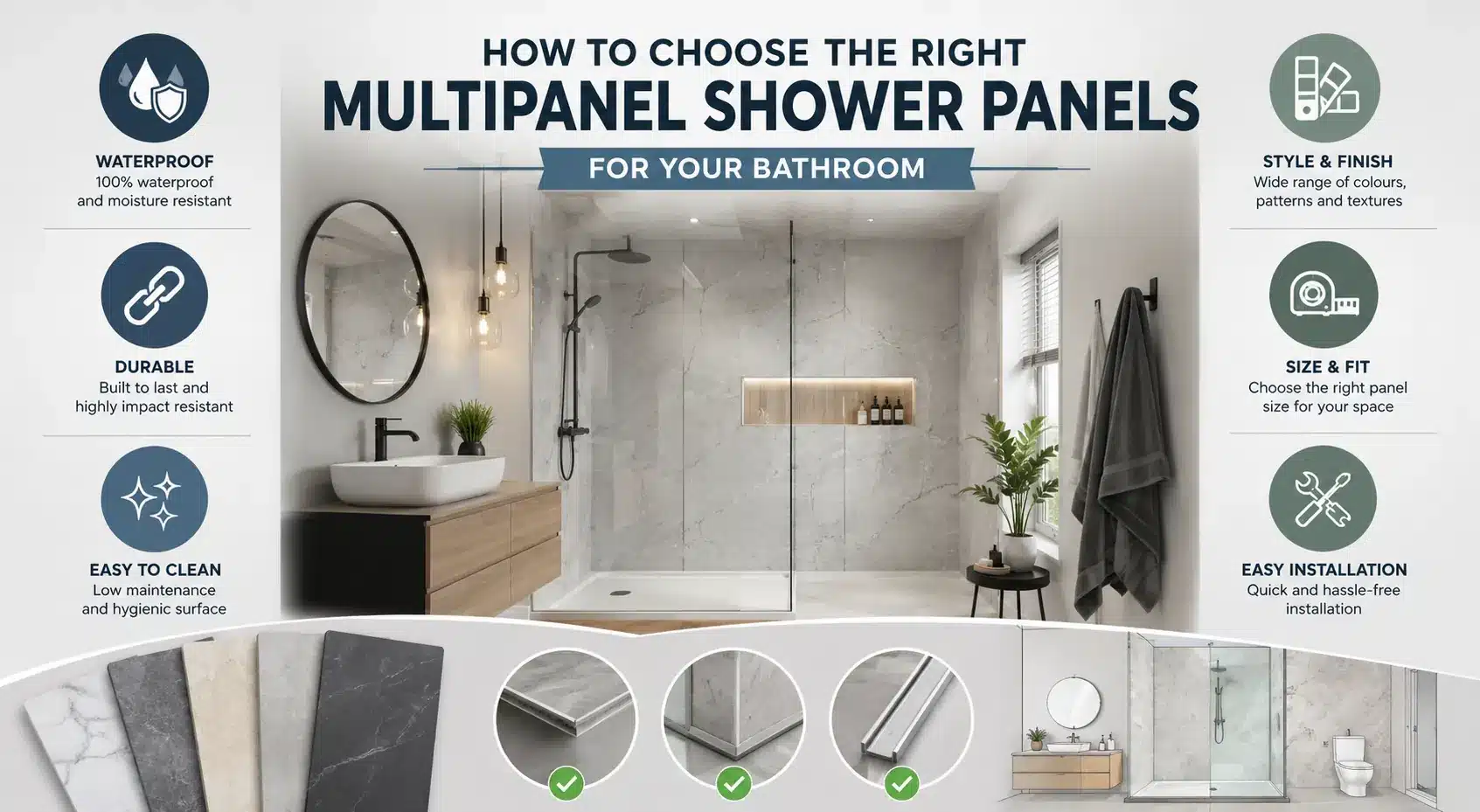
Related: How to Choose the Right Multipanel Shower Panels for Your Bathroom
What Materials Are Wetwall Panels Made From?
Most bathroom panels are made with a core of special boards that can handle moisture. These boards are usually made of MDF or marine plywood. On top of the core a waterproof layer is added. This layer can be made of acrylic, laminate or a decorative film that is sealed under a coating.
The outer waterproof layer is what really keeps water out. So it is more important to have a quality outer layer than a good core material.
The thickness of bathroom panels can vary depending on the manufacturer.. Usually panels that are between 5mm and 10mm thick are strong enough for daily use in a family bathroom. If you have a bathroom that is not used often thinner panels might work. However thin panels can. Show imperfections, on the wall behind them.
How Do Wetwall Panels Compare to Tiles?
The big difference between the two comes down to grout. Tiled showers use grout lines to seal gaps between tiles. These lines are where mould, mildew and limescale build up over time no matter how clean the bathroom is. Wetwall panels solve this problem because each sheet covers an area with no grout.
There are differences to consider:
- Installation: You can panel a shower in one day. Tiling takes days including drying time for adhesive and grout.
- Less skill required: Fitting tiles takes years of practice to get right. Panels are easier to fit. A competent DIYer can do it.
- Risk of water damage: A well-sealed panel system has fewer entry points for moisture than ageing grout that cracks.
- Easier cleaning: Without grout lines a wipe, with bathroom cleaner is enough to keep panels looking good.
This doesn’t mean tiles are a choice. They offer design options in terms of pattern and colour.. For a low-maintenance shower panels are a better option.
How Are Wetwall Panels Fitted?
Installation is quite different from tiling. The wall must be checked first for levelness, which in older houses often means installing a backing board in order to have a flat and secure surface. Then panels can be either glued in place using special adhesive or installed by using trim and fixing depending on the manufacturer’s instructions.
Trims are fitted on every edge, corner and joint of the surface. They serve not only for aesthetic reasons, but also play an important role in terms of providing waterproofing, so their installation must be done as accurately as the installation of the panels themselves.
Around different fixtures such as shower valves, mixer taps etc. panels must be cut in a precise manner, for instance if there is a gap of a few millimeters around the tap water may penetrate back behind the panel which can lead to the damage of the backing board or the wall behind it.
For those who are not sure whether they can do the installation properly, it makes sense to engage a fitter who specializes in panel installation, rather than just a plasterer, because the sealing process is totally different from the grouting process.
Where Can Wetwall Panels Be Used?
While showers provide the majority of use for these panels, they are suitable for covering any space in the bathroom by being applied in the entire wall area or around baths or utility kitchens as splashbacks.
Their high resistance to moisture and ease of maintenance make the panels a perfect match for public and commercial establishments, including gyms and nursing homes where cleanliness is essential and cleaning should be done as quickly as possible.
Besides, the panels of this type are very popular with landlords and real estate agents, given that they don’t have to worry about the durability of the panels due to the fact that they can be easily removed and replaced much simpler than tiling.
Caring for Wetwall Panels
Day-to-day maintenance is straightforward. A regular wipe-down with a non-abrasive bathroom spray prevents soap scum and limescale from building up on the surface. Harsh abrasive cleaners or scouring pads should be avoided, as they can dull the protective top layer over time and make the panel more prone to scratching.
Sealant around trims and edges should be checked periodically, particularly in hard water areas where limescale can gradually work its way into small gaps. Most manufacturers recommend resealing joints every few years as routine upkeep rather than waiting for a problem to appear.
Are Wetwall Panels a Good Long-Term Investment?
For most households, the appeal comes down to time saved rather than upfront cost, since panels and tiles are often similarly priced depending on the range chosen. Fitting time is considerably shorter, which matters if a bathroom is the only one in the house and needs to be back in use quickly. Maintenance is also lighter over the years, since there is no grout to reseal or replace.
The trade-off is design variety. While panel ranges have expanded significantly in recent years, tiles still offer more scope for intricate patterns or mixed materials. For a straightforward, practical bathroom or shower renovation, though, wetwall panels are a sound option that holds up well against everyday wear.
Frequently Asked Questions About Wetwall Shower Panels
How long do wetwall shower panels last?
With correct installation and basic maintenance, most panel systems last between 15 and 25 years. Longevity depends heavily on how well the edges and trims were sealed during fitting.
Can wetwall panels be fitted over existing tiles?
In many cases, yes, provided the existing tiles are flat, secure, and free of damage. A suitable adhesive is usually needed, and any loose or cracked tiles should be removed and the surface levelled first.
Do wetwall panels need grout?
No. Panels are designed to eliminate grout lines entirely. Sealant is used at joints and edges instead, which is why correct trim fitting matters so much.
Are wetwall panels waterproof enough for a shower?
Yes, when fitted correctly. The panels themselves are fully waterproof, and the trims and sealant at joins are what maintain that waterproofing across the whole installation.
Can I fit wetwall panels myself?
Many homeowners do fit panels themselves, particularly on straightforward flat walls. Areas involving multiple corners, recesses, or plumbing fixtures are best left to someone experienced with the specific system being used.
Do wetwall panels look cheap compared to tiles?
Higher-quality ranges now include marble-effect, stone-effect, and matt finishes that are difficult to distinguish from tiling once installed. Quality varies considerably between manufacturers, so it is worth viewing samples in person before deciding.
Published By blog.crecso.com