Best Tile Effect Wall Panels for UK Bathrooms in 2026
Tile effect wall panels have become one of the most popular choices for UK bathroom renovations in 2026, and it's easy to understand the appeal. This guide covers every material type, what to look for when buying, realistic costs, and how to get a finish that genuinely holds up over time.


If you’ve ever stood in a bathroom with grout that’s gone grey and crumbly, you’ll know exactly how tired a tiled room can look after a few years. Ripping out old tiles is messy, expensive, and frankly one of those jobs most people put off for far longer than they should. That’s why tile effect wall panels have picked up so much attention from UK homeowners in 2026.
They give you the clean, modern look of tiling without the grout lines, the mess, or the three-day installation. If you’re weighing up your options for a bathroom refresh, this guide is here to give you a straight, honest look at what’s available and how to choose well.
What Are Tile Effect Wall Panels?
Tile effect wall panels are flat or tongue-and-groove boards designed to mimic the appearance of ceramic, stone, or marble tiles. They go directly onto your existing wall surface in most cases, which means no demolition work and no need to hire a plasterer to smooth things out afterwards. The finish is printed or embossed to replicate the texture and look of real tiles, and the better-quality options are genuinely difficult to tell apart from the real thing at a glance.
Unlike traditional ceramic tiles, which are fixed individually with adhesive and grout, panels cover large sections of wall in a single piece or interlocking boards. They’re available in three main materials: PVC, acrylic, and waterproof MDF or composite board. Each has its own strengths, and the right choice depends on where in the bathroom you’re fitting them and what your budget looks like.
Why More UK Homeowners Are Choosing Them in 2026
The cost of having a bathroom tiled professionally has risen sharply over the past few years. In most parts of England, a tiler will charge anywhere from £200 to £400 per day, and a full bathroom can easily take two to three days to complete. When you add in the cost of tiles, adhesive, grout, and any wall preparation work, the total bill starts to feel quite significant for what is, at its core, a decorative surface.
Tile effect bathroom panels cut out the labour cost almost entirely for anyone who’s comfortable with basic DIY. Many products clip together with a tongue and groove system that requires no specialist tools beyond a saw, a tape measure, and some waterproof adhesive or trim pieces. Bathroom renovation trends in Britain have shifted notably towards faster, lower-disruption options, and wall panels sit squarely in that space.
There’s also been a real improvement in the quality and realism of the finishes available. Early versions of these panels had a slightly plasticky appearance that gave the game away immediately. The options on the market now, particularly in the mid to upper price range, are a different proposition entirely. According to Which? home renovation advice, bathroom improvements consistently rank among the most valued home upgrades for UK homeowners, and wall panels offer one of the more cost-effective ways to achieve a significant visual change.
The Best Types of Tile Effect Wall Panels for UK Bathrooms
Choosing the right type of panel depends on your bathroom’s layout, how wet the area gets, and how much you want to spend. Here’s a breakdown of the three main categories.
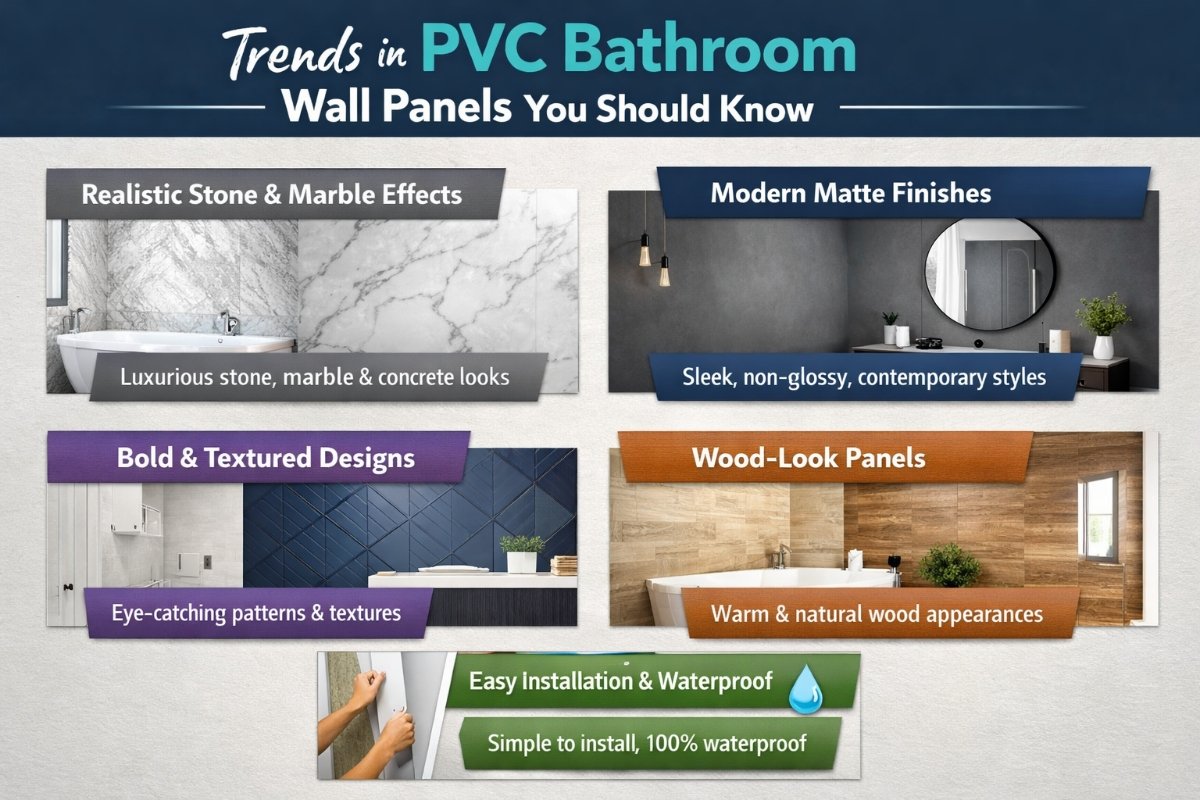
PVC Tile Effect Panels
PVC panels are the most popular choice for UK bathrooms, and it’s easy to see why. They’re fully waterproof, lightweight, and available in thicknesses ranging from 4mm right up to 10mm. The thicker boards feel more substantial underfoot and tend to give a better finish when cut, while thinner panels are easier to work with if you’re fitting around awkward features like pipes or window recesses.
- Pros: Completely waterproof, easy to cut with a standard saw, wide range of finishes and sizes, suitable for direct shower use, very low maintenance
- Cons: Thinner boards can flex slightly if the wall behind isn’t perfectly flat, some finishes look less convincing up close than others, not suitable for painting over
PVC tile effect panels are well suited to shower enclosures, around baths, and anywhere that sees regular splashing. Prices in 2026 typically range from £20 to £60 per panel depending on thickness, finish quality, and brand. A full bathroom can usually be covered for between £150 and £400 in materials.
Acrylic Tile Effect Panels
Acrylic panels tend to come in larger sheet formats and are known for their high-gloss, mirror-like finish. They’re often used as a single statement piece behind a bath or basin rather than as a full-room solution, though full bathroom kits are available. The surface is extremely smooth and reflects light well, which can make a smaller bathroom feel noticeably more open.
- Pros: Highly reflective finish adds a premium look, very hygienic surface with no grout lines to harbour mould, durable and scratch resistant, easy to wipe clean
- Cons: More expensive than PVC, can be heavier and trickier to handle solo, fingerprints and water marks show more readily on high-gloss finishes, less forgiving if the underlying wall has imperfections
Acrylic panels work particularly well in family bathrooms where a clean, low-maintenance surface is a priority. They’re also a popular choice for en-suites where the focus is on a polished aesthetic. Expect to pay £50 to £120 per panel for quality acrylic options in the UK market.
Waterproof MDF and Composite Panels
Composite and moisture-resistant MDF panels offer a middle ground between PVC and more decorative finishes. They tend to have a slightly more solid feel than thinner PVC boards and can take paint, which gives you more flexibility to change the colour down the line. The tile effect is usually achieved through a printed vinyl or laminate layer bonded to the board.
- Pros: Solid feel and good acoustic properties, can be painted if you want to change the colour, often cheaper per square metre than acrylic, works well in lower-humidity areas
- Cons: Not fully waterproof in the same way PVC is, not recommended for direct use inside walk-in showers or areas with prolonged water exposure, heavier than PVC which can make installation more demanding
Waterproof MDF panels are best suited to areas around sinks, behind toilets, or as feature walls in bathrooms where direct water contact is minimal. Prices typically range from £15 to £50 per board, making them one of the more budget-friendly options available.
Key Things to Look for When Buying Tile Effect Wall Panels in the UK
- Waterproof rating. Not all panels that claim to be waterproof are created equal. Look for panels with a confirmed Class 2 or higher waterproof rating if you’re fitting them inside a shower enclosure or bath surround. For drier areas of the bathroom, a moisture-resistant rating may be sufficient.
- Panel thickness. Thicker panels of 8mm to 10mm are more rigid and forgiving of minor wall imperfections. If your walls are particularly uneven, going thicker will save you a lot of time preparing the surface.
- Ease of cutting. Check whether the panel can be cut with a standard hand saw, jigsaw, or Stanley knife. Some acrylic panels require a fine-tooth blade to avoid chipping the surface. If you’re doing the job yourself, this matters more than you might think.
- Fixing method. Tongue and groove systems are generally easier to install and create a cleaner finish with fewer visible joins. Adhesive-only systems are fine but rely heavily on the quality of your wall preparation. Some panels work with both methods, which gives you flexibility.
- Colour and finish consistency. If you’re buying panels in batches, check that they come from the same production run to avoid visible colour variation between boards. This is especially important with stone-effect and marble-effect finishes where the pattern repeat matters.
- Fire rating compliance. In the UK, bathroom panels fitted in certain locations need to meet minimum fire resistance standards under Part B of the Building Regulations. Most reputable PVC and composite panels carry a Class 1 or Class C fire rating. Always check before purchasing, particularly if you’re a landlord fitting panels in a rental property.
Real Life Example: A Bathroom Renovation in Leeds
Claire, a 41-year-old teacher from Headingley in Leeds, had been putting off her bathroom for two years. The original tiles were original to the house from the early 2000s, and the grout had gone beyond anything a cleaning product could rescue. She got a quote from a local tiler for a full retile and nearly fell off her chair when it came back at just over £1,800 for materials and labour. A friend suggested she look at PVC tile effect panels instead.
Claire spent around £280 on 8mm marble-effect PVC panels, trims, and waterproof adhesive from a trade supplier in Leeds. She’d never done anything like it before, but with a YouTube tutorial and a free weekend, she managed the whole bathroom herself. The shower enclosure took the longest, about four hours, but the rest went smoothly. Six months on, she says the panels look just as good as they did on day one, and the bathroom is easier to clean than it’s ever been. She reckons the whole project cost her just under £350 once she’d included the tools she needed to buy.
Installation Tips for a Professional Finish
- Let the panels acclimatise. Leave your panels in the room for at least 24 hours before fitting. PVC especially can expand and contract with temperature changes, and fitting them cold from a van can lead to small gaps appearing later.
- Start with the most visible wall. Begin on the wall that faces you when you walk into the bathroom. Any slight misalignment or minor imperfection will be far less noticeable on a side wall or behind the door.
- Use the right adhesive. Not all grab adhesives are compatible with PVC. Use a solvent-free, waterproof panel adhesive and apply it in a series of vertical beads rather than spreading it flat. This gives a stronger bond and allows the panel to be repositioned briefly if needed.
- Cut panels face-down when using a circular saw. The blade cuts on the upstroke, which means cutting face-up risks chipping the decorative surface. Face-down gives you a cleaner edge with far less finishing work required.
- Seal every joint and cut edge. Even fully waterproof panels can allow moisture to creep behind them if joints and cut edges aren’t sealed properly. Use a good quality silicone sealant that matches your trim colour and run a neat bead along every join, particularly at floor and ceiling level.
- Use corner and edge trims properly. Internal and external corner trims are not optional extras. They protect the edges of the panels from peeling, give a clean finish, and stop moisture from getting behind the boards at the most vulnerable points.
- Don’t skip the wall preparation. Any loose paint, mould, or grease on the wall will compromise the adhesive bond. Wipe down the surface with a sugar soap solution and allow it to dry completely before you start. If there’s mould present, treat it with a specialist killer product and leave it for the recommended dwell time.
Where Tile Effect Panels Work Best in a Bathroom
The shower enclosure is where waterproof wall panels genuinely shine. Without grout lines to harbour soap scum and mildew, keeping a panelled shower clean requires nothing more than a quick wipe after use. Full-height PVC or acrylic shower wall panels UK installers recommend are typically fitted floor to ceiling for maximum protection and a sleek, unbroken look.
Around the bath, panels are an excellent alternative to a traditional tiled surround, and they’re particularly good at dealing with the junction between the panel and the bath rim, which is one of the most common places for water ingress and mould in a tiled bathroom. A properly siliconed panel-to-bath joint holds up far better over time than grouted tile edges in the same position.
Behind the basin and as a splashback behind a toilet are two more spots where tile look wall panels perform reliably. They’re also increasingly being used as a full-room solution, covering every wall from floor to ceiling for a uniform, completely grout-free bathroom. This approach works especially well in smaller bathrooms where simplicity of surface helps the space feel less cluttered.
Are Tile Effect Wall Panels a Good Long-Term Investment?
Used correctly, quality PVC and acrylic panels can last 20 years or more without needing replacement. They don’t crack, they don’t let grout deteriorate, and they’re resistant to the kind of water damage that shortens the life of a traditionally tiled bathroom wall. Maintenance amounts to little more than a weekly wipe with a non-abrasive cleaner, which most people find a welcome change from scrubbing grout lines.
On the question of resale value, the honest answer is that it depends on the quality of the finish. A well-fitted bathroom with high-quality marble or stone-effect panels is unlikely to put buyers off, and many people actively appreciate the low-maintenance aspect. Budget-end panels with an obviously synthetic appearance can work against you, so it’s worth spending a little more on the finish if the bathroom is likely to be a selling point.
As the team at Homebuilding and Renovating point out, bathroom wall panels have moved firmly into mainstream renovation territory. They’re no longer seen as a purely budget option, particularly at the upper end of the market where the finishes are genuinely impressive. The main drawback worth acknowledging is that if a panel is damaged, replacing a single section can be tricky if the product is no longer available. It’s always worth keeping a couple of spare boards from the original batch for this reason.
Also Read: Small Cloakroom Ideas That Make the Most of Every Inch
Conclusion
Tile effect wall panels offer UK homeowners a genuinely practical way to transform a tired bathroom without the cost, disruption, and ongoing maintenance that comes with traditional ceramic tiling. Whether you’re a first-time buyer working with a tight budget, a landlord looking for a durable and tenant-friendly finish, or a homeowner who simply wants a cleaner-looking bathroom with less effort to keep it that way, there’s a panel option to suit your situation.
The key is choosing the right material for the job, paying attention to the details during installation, and not cutting corners on things like sealing and edge trims. Do it properly and a panelled bathroom can look excellent and hold up well for many years. The best tile effect wall panels available in the UK in 2026 are a long way from the plasticky sheets that gave the category a mixed reputation a decade ago. With a bit of research and a realistic budget, the results can be genuinely impressive.
If you’re ready to start planning your bathroom renovation, take some time to compare finishes in person where you can, order samples before committing to a full order, and don’t underestimate the difference that quality trims and proper sealing make to the final result. Your bathroom will thank you for it.
Frequently Asked Questions
Can you use tile effect panels in a shower?
Yes, provided you choose panels that are rated as fully waterproof. PVC tile effect panels of 8mm or thicker are the most reliable option for shower enclosures. Make sure all joints and cut edges are sealed with waterproof silicone and that the panels extend well beyond the wet zone. Acrylic panels are also suitable for showers. Standard moisture-resistant MDF panels should not be used inside a shower enclosure.
How long do tile effect wall panels last?
Good quality PVC and acrylic panels have a lifespan of 20 years or more when correctly installed and maintained. The most common causes of early failure are poor installation, inadequate sealing around joints, and fitting panels in conditions they’re not rated for, such as using moisture-resistant boards in a direct shower. Keeping a couple of spare panels from your original purchase is a sensible precaution in case you ever need to replace a damaged section.
Are tile effect panels cheaper than tiles?
In most cases, yes, particularly when you factor in the cost of professional installation. The materials themselves can be comparable in price to mid-range ceramic tiles, but because most people can fit wall panels themselves with basic DIY skills, the overall project cost is typically much lower. A full bathroom tiled professionally can easily cost £1,500 to £2,500 or more. The same bathroom panelled using DIY-installed PVC boards can come in at £300 to £600 for materials, depending on the size of the room and the quality of panel you choose.
Can I fit tile effect panels myself?
Yes, and many people do. Tongue and groove PVC panels are among the most DIY-friendly products you’ll find in the bathroom renovation category. You’ll need a saw, a tape measure, waterproof adhesive, silicone sealant, and a set of matching trims. The most important things are taking accurate measurements, preparing the wall surface properly, and sealing every joint and edge thoroughly. If you’re fitting panels inside a shower enclosure for the first time, it’s worth watching a few installation videos before you start so you can plan the sequence of work before opening any packaging.
Do tile effect wall panels look realistic?
The better quality panels available in 2026 are genuinely convincing, particularly the stone, marble, and large-format tile effect designs. At a normal viewing distance, it’s difficult to tell them apart from real tiles. The main visual giveaway on lower-quality panels is the pattern repeat, where the same printed design tiles across multiple boards in a visible sequence. Mid to upper range panels use more varied patterns to reduce this effect. If realism is important to you, it’s worth ordering samples before committing so you can see the finish in your own bathroom lighting.
Editor’s note: All prices mentioned in this article are approximate and based on UK market conditions at the time of writing. Prices may vary by supplier, region, and panel specification.
Published By blog.crecso.com