Best Shower Panels UK for Small Bathrooms: A Complete Buying Guide
Looking for the best shower panels UK for a compact bathroom? Explore space-saving PVC shower panels and shower wall panels that combine style, durability, and easy maintenance for modern UK homes.


Small bathrooms present a unique set of challenges. Limited floor space, awkward alcoves, and the constant battle against damp and mould make choosing the right wall covering one of the most important decisions you will make during a bathroom renovation.
Shower panels UK homeowners are increasingly turning to have transformed the way we think about compact bathroom design, offering a clean, low-maintenance, and genuinely stylish alternative to traditional ceramic tiles.
Whether you are working with a tiny ensuite, a narrow galley bathroom, or a box room conversion, this guide walks you through everything you need to know about selecting the best shower wall panels for a small space, including material choices, sizing considerations, colour and finish advice, and the key features that separate a quality panel from a cheap one.
Why Shower Wall Panels Work So Well in Small Bathrooms
The appeal of shower wall panels in compact bathrooms goes beyond aesthetics. Grout lines are one of the biggest problems in small tiled bathrooms. They collect mould, attract limescale, and require constant scrubbing to keep looking presentable.
Large format panels eliminate grout joints entirely, which means fewer places for grime to gather and far less time spent on maintenance. From a visual standpoint, seamless panels make a small bathroom feel noticeably bigger.
When walls are broken up by dozens of individual tiles and grout lines, the eye registers each division separately, which makes a space feel busier and more confined. A continuous wall panel surface gives the eye somewhere to rest and creates an impression of greater width and height.
Installation is another significant advantage. Most shower panels UK suppliers offer tongue-and-groove or click-fit systems that can be fitted directly over existing tiles, meaning no messy tile removal, no extended downtime for the bathroom, and considerably less disruption to the rest of the household.
PVC Shower Panels: The Practical Choice for UK Homes
PVC shower panels are by far the most popular choice in the UK residential market, and it is easy to understand why. They combine genuine waterproofing with affordability, easy maintenance, and an increasingly wide range of designs that rival natural stone and ceramic tile aesthetics at a fraction of the cost.
What Are PVC Shower Panels?
PVC shower panels are rigid wall cladding boards manufactured from polyvinyl chloride, typically with a foam or honeycomb core sandwiched between two solid facing layers. The result is a lightweight but sturdy panel that is completely impervious to water when correctly installed.
Unlike tiles, there are no grout joints, no risk of water penetrating behind the surface, and no concern about individual tiles cracking or lifting over time. The surface finish on modern PVC shower panels has improved enormously over the past decade.
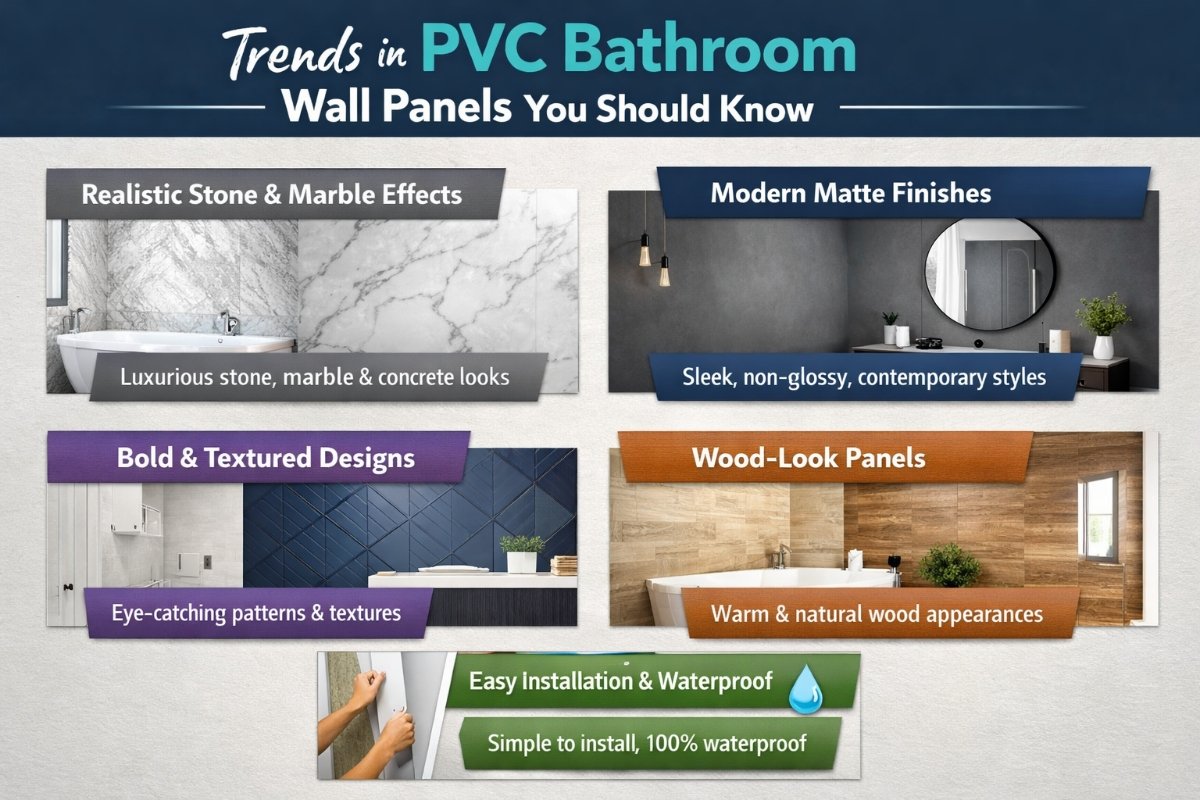
High-resolution printing and UV-bonded acrylic or gloss coatings now allow manufacturers to produce panels that convincingly replicate marble, slate, travertine, concrete, and wood grain textures. Viewed in a finished bathroom, many visitors cannot immediately tell the difference between a premium PVC panel wall and the natural material it imitates.
Benefits of PVC Shower Panels in Small Bathrooms
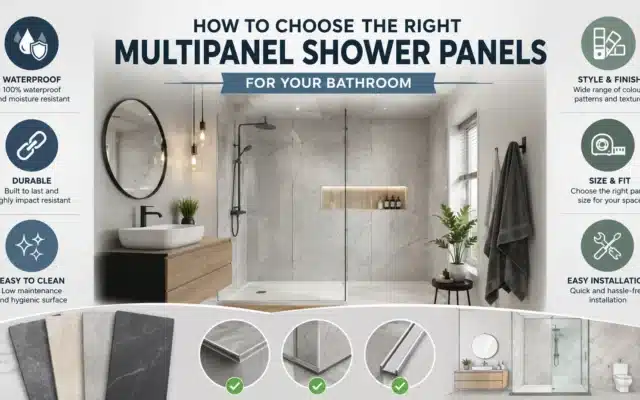
- 100% waterproof: Unlike painted plasterboard or even some acrylic sheets, quality PVC shower panels will not absorb moisture under any circumstances, which is critical in a small bathroom where ventilation may be limited.
- Lightweight: PVC panels are significantly lighter than ceramic or porcelain tiles, which means they place less stress on walls and are far easier to handle in a compact space where there is little room to manoeuvre large sheets.
- Easy to cut and fit: Standard timber or fine-tooth panel saws cut PVC cleanly, making it straightforward to work around awkward shapes, pipe runs, and odd-sized walls that are common in small UK bathrooms.
- Mould resistant: The non-porous surface provides no foothold for mould or mildew, which is a particularly important consideration in bathrooms with poor natural ventilation.
- Cost effective: Good quality PVC shower panels typically cost considerably less per square metre than ceramic wall tiles once you factor in the cost of adhesive, grout, and professional tiling labour.
Thickness Matters: What to Look For
Not all PVC shower panels are made equally, and thickness is one of the most reliable indicators of quality. For a small bathroom or shower enclosure, panels of at least 8mm to 10mm thickness are recommended.
Thinner panels, particularly those below 5mm, can flex noticeably when pressed, which weakens adhesive bonds over time and creates a hollow, insubstantial feel underfoot when cleaning the walls.
For walls that may have minor undulations or imperfections, such as those found in older UK terraced houses and Victorian conversions, a thicker panel is especially beneficial because it bridges small surface irregularities without telegraphing them through the face of the panel.
Choosing the Right Shower Wall Panels for a Small Space
With so many options available from UK suppliers, narrowing down the right shower wall panels for your specific bathroom requires thinking carefully about size, colour, finish, and how the panels will interact with the other elements of the room.
Colour and Pattern Selection
In a small bathroom, the colour of your wall panels will have a significant impact on how spacious the room feels. As a general rule, lighter tones open a space up while darker tones draw the walls in. However, this does not mean you should limit yourself to clinical white if that is not to your taste.
- Marble effect panels in pale grey or soft white tones are among the most popular choices for small UK bathrooms. The natural veining adds visual interest without making the walls feel busy, and the overall effect reads as both luxurious and spacious.
- Concrete effect panels in mid-grey work well in contemporary or industrial-style bathrooms and are surprisingly effective at making a compact space feel considered and deliberate rather than cramped.
- Gloss white panels remain a classic option. The reflective surface bounces light around the room and creates a genuinely larger-feeling space, which is particularly useful in bathrooms that lack a natural light source.
- Nude and stone tones are gaining popularity in UK bathrooms and lend a spa-like warmth to smaller rooms without the visual weight of bold colours.
Panel Size and Format
Most shower wall panels sold through UK suppliers come in standard widths of 250mm, 375mm, or 1000mm, with heights typically ranging from 2400mm to 2700mm to accommodate ceiling heights commonly found in British homes.
For small bathrooms, wider format panels, such as the 1000mm tongue-and-groove boards, tend to produce the most seamless result because fewer vertical joints are needed to cover the wall area. This keeps the wall surface cleaner and more uniform, which maximises the space-enhancing effect.
Narrow tongue-and-groove boards of 250mm or 375mm can also work well if you are aiming for a more traditional or panelled aesthetic, but be mindful that the increased number of vertical lines can make a very narrow bathroom feel slightly tighter.
Surface Finish: Gloss, Satin, or Matt?
The finish of your shower panels UK choice will affect both the look and the practicality of the installation.
Gloss finishes are the easiest to wipe down, reflect the most light, and create the most immediate sense of space in a small bathroom. The trade-off is that they show water marks and fingerprints more readily, which can be frustrating in a hard water area such as much of the South East and Midlands of England.
Satin and matt finishes are more forgiving of water spots and daily use marks. They produce a more contemporary, understated look that suits the current trend towards neutral, spa-inspired bathrooms. They do require a slightly more thorough clean to remove soap scum, but the overall maintenance burden is still far lower than grout-filled tile walls.
Installation Tips for Small Bathrooms
Getting the installation right is just as important as choosing the correct panels. Even the best shower wall panels will underperform if they are not fitted correctly, and in a small bathroom, any error is more visible simply because everything is in close proximity.
Preparing the Substrate
Before fitting any shower panels UK product, the substrate must be sound, dry, and reasonably flat. Plasterboard, plywood, brick, block, and existing ceramic tiles are all suitable surfaces for direct adhesive bonding, provided they are stable and free from loose material.
In older properties, it is worth checking for any damp within the wall before covering it. PVC shower panels are waterproof on the room side, but if moisture is already present within the wall structure, trapping it behind an impermeable panel can lead to structural problems over time. Address any damp issues before installation begins.
Using the Correct Adhesive
Silicone-based or solvent-free grab adhesives are the correct choice for bonding PVC shower panels to walls. Standard tile adhesive is not suitable as it is not flexible enough to accommodate the minor thermal movement that PVC undergoes as the bathroom heats and cools with daily use.
Use a good quality grab adhesive applied in a serpentine pattern across the back of the panel to ensure full and even contact with the wall.
Sealing Joints and Edges
The waterproof integrity of any shower wall panels installation depends entirely on the quality of the silicone sealing at joints, edges, and internal corners. Use a bathroom-grade, mould-resistant silicone in a colour that matches or complements your panels.
Pay particular attention to the junction between the panel and the shower tray or bath rim, as this is the area most likely to experience water ingress if the seal deteriorates.
Comparing Shower Panel Materials: Which Is Right for You?
| Material | Waterproof | Grout Free | Cost (Per m²) | Maintenance | Best For |
|---|---|---|---|---|---|
| PVC Panels | Yes | Yes | Low to mid | Very easy | Most bathrooms, budget-conscious renovations |
| Acrylic Panels | Yes | Yes | Mid to high | Easy | Wet rooms, high-end finishes |
| Laminate Panels | Surface only | Yes | Mid | Moderate | Decorative walls outside wet zone |
| Ceramic Tiles | Surface only | No | Mid to high | High (grout maintenance) | Traditional aesthetic preferences |
| Stone Effect Panels | Yes | Yes | Mid to high | Easy | Luxury look on a moderate budget |
Top Features to Look for When Buying Shower Panels in the UK
When browsing shower panels UK retailers, whether online or in a showroom, keep the following features in mind to ensure you are investing in a product that will serve you well for years to come.
- Panel thickness of 8mm or above for rigidity and durability in daily use.
- UV-stable surface coating to prevent the colour from fading or yellowing under bathroom lighting over time.
- Tongue-and-groove or interlocking edge profiles for a seamless join between panels with no visible gaps.
- Matching trim profiles including internal and external corner trims, end caps, and starter trims, so you can achieve a fully finished look without improvising at the edges.
- UK supplier with a clear returns policy in case panels arrive damaged, which is more common than you might expect with large, flat-pack products.
- Manufacturers guarantee of at least 10 years for peace of mind on the waterproof performance of the product.
How Much Do Shower Wall Panels Cost in the UK?
The cost of shower wall panels in the UK varies considerably depending on the material, thickness, surface finish, and the supplier.
As a rough guide, entry-level PVC shower panels start from around £10 to £15 per square metre, while mid-range products with more convincing stone or marble effects typically sit between £20 and £40 per square metre. Premium acrylic and solid surface panels can exceed £80 to £100 per square metre.
For a typical small UK bathroom with approximately 8 to 12 square metres of wall area to cover, you might expect to spend between £100 and £500 on panels depending on the quality level you choose, before accounting for trims, adhesive, and silicone sealant.
Professional installation costs vary by region and the complexity of the job, but most bathroom fitters charge between £150 and £400 for a standard panel fitting in a small bathroom, which remains considerably cheaper than the labour cost of a full tile installation.
Maintaining Your Shower Wall Panels
One of the strongest selling points of shower wall panels is how little effort they require to keep clean. Unlike grout, which demands specialist cleaners, scrubbing brushes, and considerable patience, panel walls can be maintained with nothing more than a soft cloth and a mild household bathroom cleaner.
For gloss-finish PVC shower panels, wiping the surface down with a microfibre cloth after each shower will prevent limescale build-up from hard water. A weekly spray with a diluted white vinegar solution or a dedicated bathroom cleaner is sufficient to keep the surface looking its best.
Avoid abrasive scourers, wire wool, or solvent-based cleaners on PVC panels as these can permanently scratch or cloud the surface finish. Stick to soft cloths and non-abrasive sprays and your panels should look excellent for many years.
Frequently Asked Questions About Shower Panels UK
Can shower wall panels be fitted over existing tiles?
Yes, in most cases shower wall panels can be bonded directly over existing ceramic or porcelain tiles, provided the existing tiles are firmly adhered to the wall with no hollow or loose sections. This is one of the key advantages of panels over retiling, as it significantly reduces installation time and avoids the mess of tile removal.
Are PVC shower panels suitable for steam showers?
PVC shower panels are suitable for standard shower enclosures and wet rooms. For dedicated steam showers operating at higher temperatures and humidity levels, it is worth checking the maximum temperature rating specified by the manufacturer, as some entry-level PVC products have lower heat resistance than premium alternatives.
How long do shower panels last?
Quality shower panels UK products from reputable manufacturers typically carry guarantees of 10 to 25 years. With proper installation and routine maintenance, a well-chosen panel system will realistically last the lifetime of the bathroom renovation, which averages around 15 to 20 years in most UK homes.
Do shower panels add value to a property?
A well-installed, high-quality shower wall panels finish in a small bathroom can absolutely add to the perceived value and appeal of a property, particularly among buyers who appreciate low-maintenance living. The key is to choose a design that has broad appeal rather than a highly specific personal taste, and to ensure the installation is completed to a high standard.
Can I install shower panels myself?
Many homeowners with basic DIY skills successfully install PVC shower panels as a weekend project. The main requirements are the ability to take accurate measurements, cut panels to size cleanly, and apply adhesive and silicone sealant neatly. That said, if you are in any doubt about the condition of the wall substrate or the waterproofing requirements, consulting a professional bathroom fitter is always a sensible investment.
Final Thoughts
For small bathrooms across the UK, shower wall panels offer a compelling combination of practicality, visual appeal, and long-term value that traditional tiling simply cannot match.
Whether you opt for entry-level PVC shower panels for a budget-conscious renovation or invest in premium stone-effect panels for a more luxurious finish, the result is a bathroom that is easier to clean, more resistant to moisture damage, and visually more spacious than a tiled equivalent.
The range of shower panels UK suppliers now stock covers virtually every style and budget imaginable, from simple gloss white boards to highly realistic marble and slate effects that would not look out of place in a high-end hotel.
With the right choice of panel and a carefully considered colour and finish, even the smallest British bathroom can be transformed into a space that feels genuinely calm, clean, and well designed.
If you are ready to explore your options, take a look at our full range of shower wall panels and PVC shower panels to find the right solution for your bathroom.
Published By blog.crecso.com.